since 1976

since 1976
By Lee Pang Seng
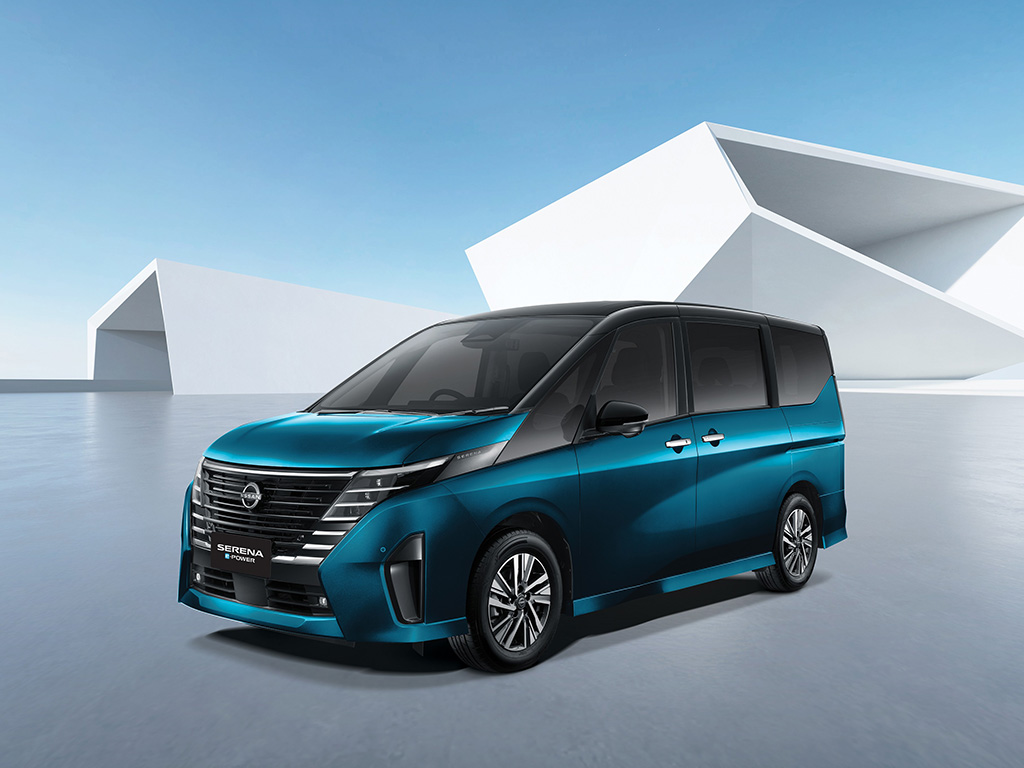
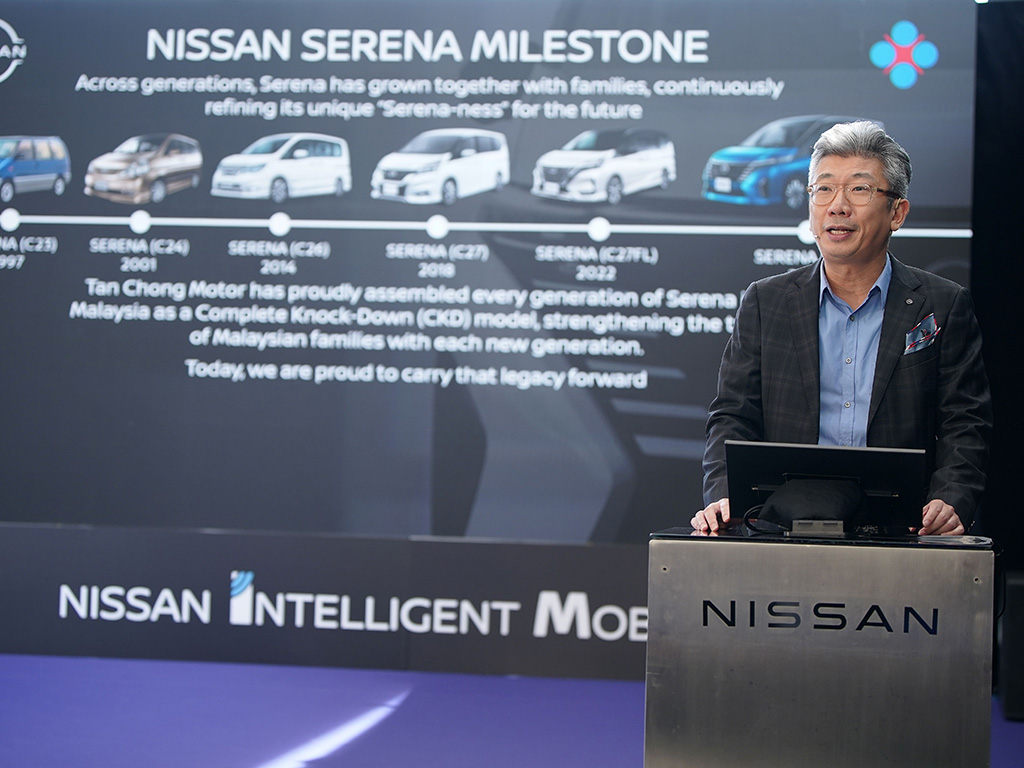
THE latest Nissan Serena has gone electric with its Range Extender Electric (REE) approach via its e-Power system. Now, in its sixth generation, the Serena continues to be locally assembled, something that Edaran Tan Chong Motor (ETCM) says it has done for all the models (since the first generation in 1997) till the latest generation.
While the basic body profile differs slightly from the previous model, the latest Serena carries new styling interpretations and design changes to lift its standing as an electrically powered MPV (multipurpose vehicle). Clear to the eye is the latest interpretation of Nissan V-Motion grille that is supported by newly designed LED (light emitting diode) lamps in the triple projector headlamps, daytime running lights and foglamps.
The front bumper is said to be aerodynamically optimised with air curtains on each side to reduce body sway and increase stability. The body is also reprofiled to feature a ‘strong’ shoulder line while the redesigned rear tailgate comes with boomerang-shaped LED taillamps connected by an accent carrying the Serena name.
Based on the steady demand for previous models of the Serena, ETCM has painted the town red with five variants to capture a wider market. There are two X model variants and three Highway Star options, and it is mainly in the interior features and equipment that identify the respective model variant.
The basic Serena X and Highway Star variants come with black fabric upholstery, with the X Plus having leatherette seats, the Highway Star Premium black Nappa combination leather and the Highway Star Shiro having white Nappa combination leather seats. The X variants have smaller instrument panels (7-inch) and multi-info touchscreens (9-inch) while the Highway Star models come with 12.3-inch instrument panels and multi-info touchscreen displays
The Highway Star Premium and Shiro, as well as the X Plus, come with top-mounted 14-inch monitor (motorised for the Shiro). All Highway Stars come with six USB ports and wireless charger while the X variants have only two. Likewise, the Highway Star variants come with 15 cupholders against 11 for the X models. The former also has six speakers against four for the Serena Xs.
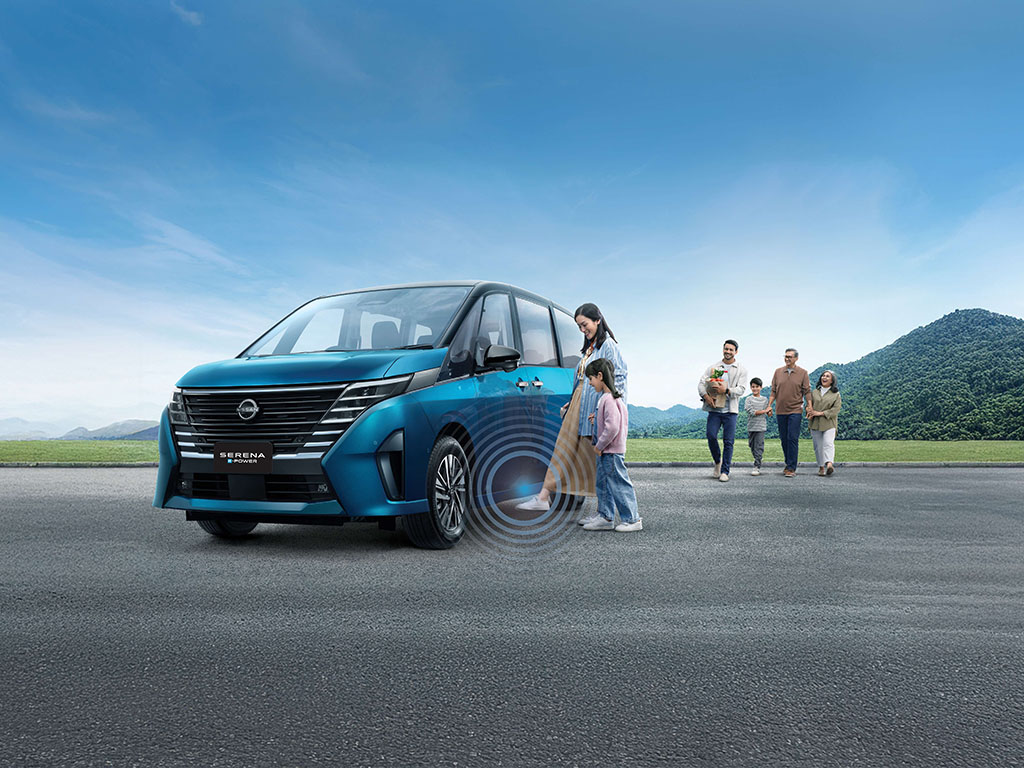
For rear passengers getting into the MPV, the Highway Stars have dual sliding doors that operate hands-free with electric assistance while the X variants come with hands-free power assistance for the left door but manual operation for the right one. The Highway Stars are also equipped with 360-degree camera for all-round view monitor (the X variants get only a rearview camera).


The Highway Star Shiro’s top status is further lifted with a power tailgate and LED kicking plate feature. What is common to all Serena variants are the second-row Captain seats with armrests and long slide function. The seven-seater MPV offers a modest 280 litres of luggage space but you could more than double that by folding away the third-row seats.
For vehicle propulsion, the latest Serena comes with the second-generation e-Power system that we first experienced in the Kicks e-Power during end 2024. This system basically uses an internal combustion engine (ICE) as a range extender to charge the lithium-ion battery that provides electricity to the electric motor to drive the front wheels of the Serena.
Nissan’s range extender approach is not new as it introduced the system in the third-generation Serena in 2014. Back then, it featured a small electric motor with generator and a secondary battery. It was meant to provide electric assistance during acceleration and regenerative charging of the vehicle’s batteries. The Serena then used a 2.0-litre engine as its main drive source.
Being a bigger and heavier vehicle than the Kicks SUV (sport utility vehicle), the Serena comes with a bigger displacement engine (1433cc against the Kicks’ 1198cc). While the lithium-ion battery is of a smaller capacity at 1.77kWh (2.1kWh), the electric motor is bigger and produces higher output – 120kW (162PS) and 315Nm against 95kW (129PS) and 280Nm.
We were not invited for the Serena media preview drive to Kuantan earlier this year but from the output figures of the electric motor, we believe the Serena e-Power should move along just as briskly as the Kicks e-Power. Having a bigger displacement engine to charge the battery also means a higher fuel consumption; ETCM says the average fuel consumption is 18.5km/l (the 1.2-litre engine in the Kicks gains with 21.7km/l) (NEDC – New European Driving Cycle).


The Serena e-Power is priced from RM154,800 on the road without insurance for the X variant to RM179,800 for the flagship Shiro model. To celebrate the vehicle’s launch, ETCM says early bird customers would enjoy an introductory rebate of RM5000 and a complimentary accessories package worth RM8000.
This new Nissan MPV is covered by a five-year or 100,000km vehicle warranty and an eight-year or 160,000km e-Power component warranty. The latter covers items such as the high-voltage battery, electric motor, inverter and e-Power control unit.
The excitement about Nissan’s e-Power raised with the Kicks SUV has probably spilled over to the new Serena. ETCM Executive Vice President Christopher Tan said during the vehicle launch that more than 1000 bookings for the Serena e-Power were already received.